
10 to 10 to 10:10 Television Reflected:
A Media-Installation Event
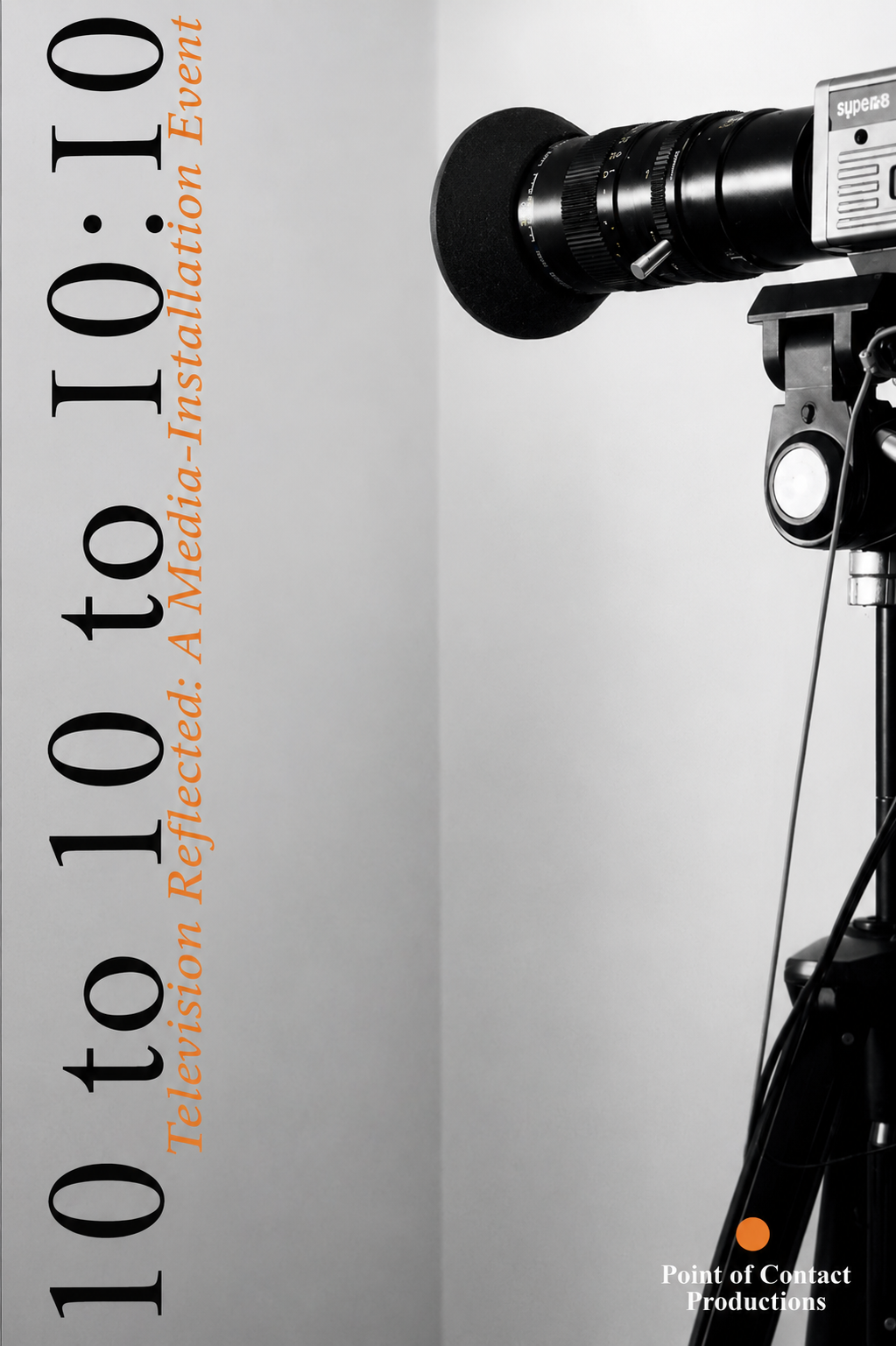
Point of CONTACT 10 to 10 to 10:10 2003, 99 pages
Published in 2003 by Point of Contact in collaboration with Syracuse University Press, this book documents a media-installation event held on April 17, 2002, at Syracuse University's Newhouse School of Public Communications. Conceived by Richard Breyer, Pedro Cuperman, Peter Moller, Christine Fawcett, and Owen Shapiro, the project invited ten people from different backgrounds — academics, artists, musicians, a journalist, and an activist — to record exactly 20 minutes of television on April 1st and then publicly reflect on the experience, treating their brief sample as a "DNA slice" of the vast television medium. The book opens with introductions by Breyer and by then Newhouse Dean David Rubin.
Interior and cover art—from the Point of Contact art collection—by video artist Nam June Paik is woven throughout, visually reinforcing the book's meditation on television as cultural artifact.
The ten panelists include: Syracuse University Professors Silvio Torres-Saillant and Horace Campbell; playwright Lynn Pannell; Hunter College CUNY Professor Linda Martin-Alcoff; physicist Peter Saulson; peace activist Curtis Fishinghawk; composer Joanne Shenandoah; conductor Daniel Hege; Mohawk journalist Doug George-Kanentiio; and the late musician and arts leader in Central NY, Leo Crandall. Together, the reflections form a wide-ranging, often provocative collective essay on power, race, gender, corporate ownership, and the medium of television.
The digital version of this Point of Contact edition is accessible here, or in print, available for purchase through Punto Shop.