Rimma Gerlovina & Valeriy Gerlovina

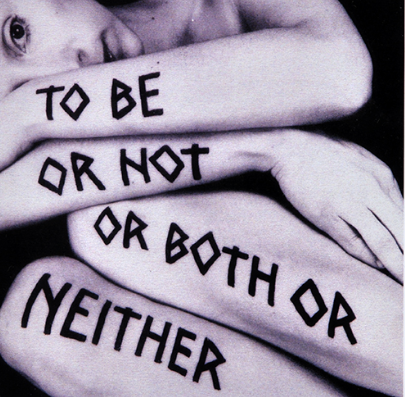
To Be 1993
Black-and-white photographic prints
10 × 7 in. (framed: 18 × 14 in.)
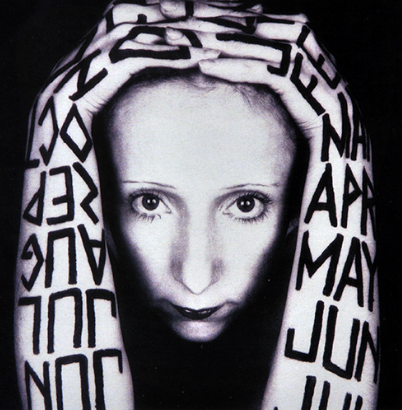
Rimma Gerlovina and Valeriy Gerlovin were founding members of the underground conceptual art movement in Soviet Russia, later documented in their publication Russian Samizdat Art. After emigrating to the United States in 1980, they developed an internationally recognized practice, exhibiting widely in major institutions such as the Art Institute of Chicago, Guggenheim Museum, Centre Pompidou, and participating in global events like the Venice Biennale. Their work has also been featured in prominent publications including The New York Times Magazine, reflecting their broad cultural impact.

The Point of Contact Permanent Collection includes several works by the artists, underscoring their significance within the institution’s focus on global contemporary art.

To Be reflects Rimma Gerlovina’s exploration of identity, language, and existence through minimalist visual form. Created in collaboration with Valeriy Gerlovin, the work exemplifies their shared conceptual practice, often merging text and image to question systems of meaning and perception.

Part of the series Point of Contact: The America’s Baroque, this piece engages with themes of transformation and cultural hybridity. The stark black-and-white composition emphasizes the tension between presence and absence, inviting viewers to reflect on what it means “to be” within shifting personal and cultural contexts.

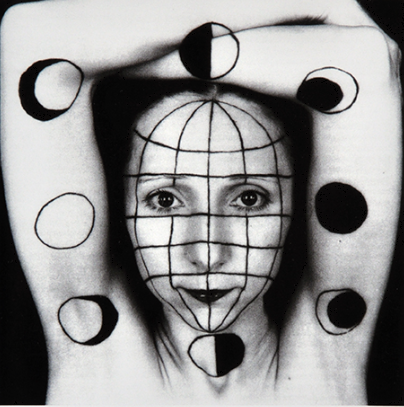
Lunation 1993
Black-and-white photographic prints
10 × 7 in. (framed: 18 × 14 in.)
In Lunation, Rimma Gerlovina continues her exploration of language, symbolism, and cyclical time through a restrained visual vocabulary. Created in collaboration with Valeriy Gerlovin, the work reflects the duo’s conceptual approach, often rooted in philosophical inquiry and the poetic potential of signs.

The title references the lunar cycle, suggesting rhythms of transformation, renewal, and repetition. Through its stark black-and-white composition, the piece evokes both cosmic order and introspective contemplation, inviting viewers to consider the passage of time and the subtle shifts that shape human perception and existence.

Calendar 1993
Black-and-white photographic prints
10 × 7 in. (framed: 18 × 14 in.)

In Calendar, Rimma Gerlovina examines systems of time, order, and human attempts to structure experience. Produced in collaboration with Valeriy Gerlovin, the work reflects the artists’ shared interest in conceptual frameworks that merge visual imagery with philosophical inquiry.

By invoking the familiar structure of a calendar, the piece points to the tension between measured, linear time and the more fluid, subjective nature of lived experience. Its stark black-and-white composition underscores this contrast, inviting viewers to reconsider how time is organized, perceived, and internalized.

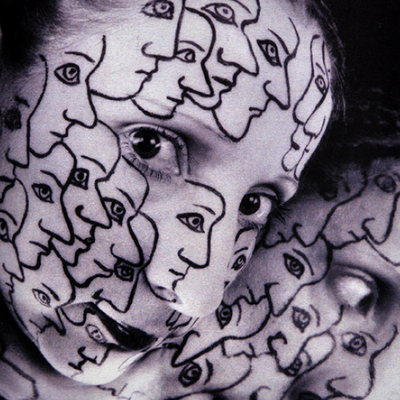
Manyness 1993
Black-and-white photographic prints
10 × 7 in. (framed: 18 × 14 in.)

In Manyness, Rimma Gerlovina explores the idea of multiplicity and the fragmented nature of identity. Created in collaboration with Valeriy Gerlovin, the work reflects the pair’s conceptual practice, which often merges language, symbolism, and visual form to examine how meaning is constructed.

The title suggests plurality and the coexistence of multiple states of being. Through its stark black-and-white composition, the piece invites viewers to consider how identities shift and overlap, challenging the notion of a singular, fixed self and emphasizing instead a dynamic and layered understanding of existence.

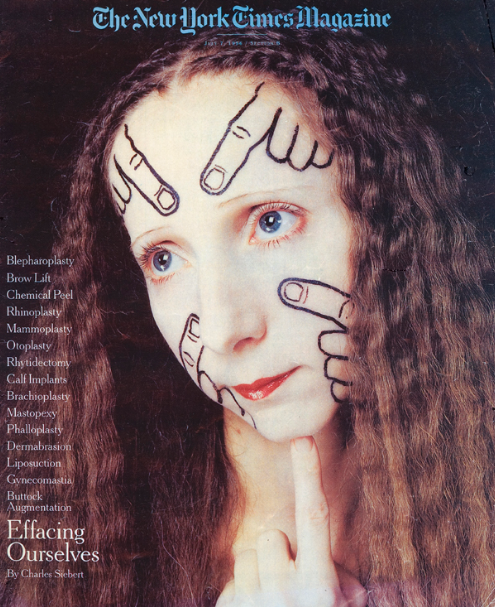
The New York Times Magazine 1996
Color photographic prints
11 × 9 ½ in. (mat: 11.5 × 9.5 in., unframed)

The New York Times Magazine exemplifies Rimma Gerlovina’s engagement with media, representation, and cultural discourse. Produced in collaboration with Valeriy Gerlovin, the work investigates how printed media shapes perception and constructs meaning in contemporary society.

Using vibrant color photography, Gerlovina transforms familiar magazine imagery into a visual meditation on communication, narrative, and the layering of visual and textual information. The piece invites viewers to reflect on the interplay between public media, personal interpretation, and the ways in which information circulates within cultural and social frameworks.

More about Rimma Gerlovina and Valeriy Gerlovin